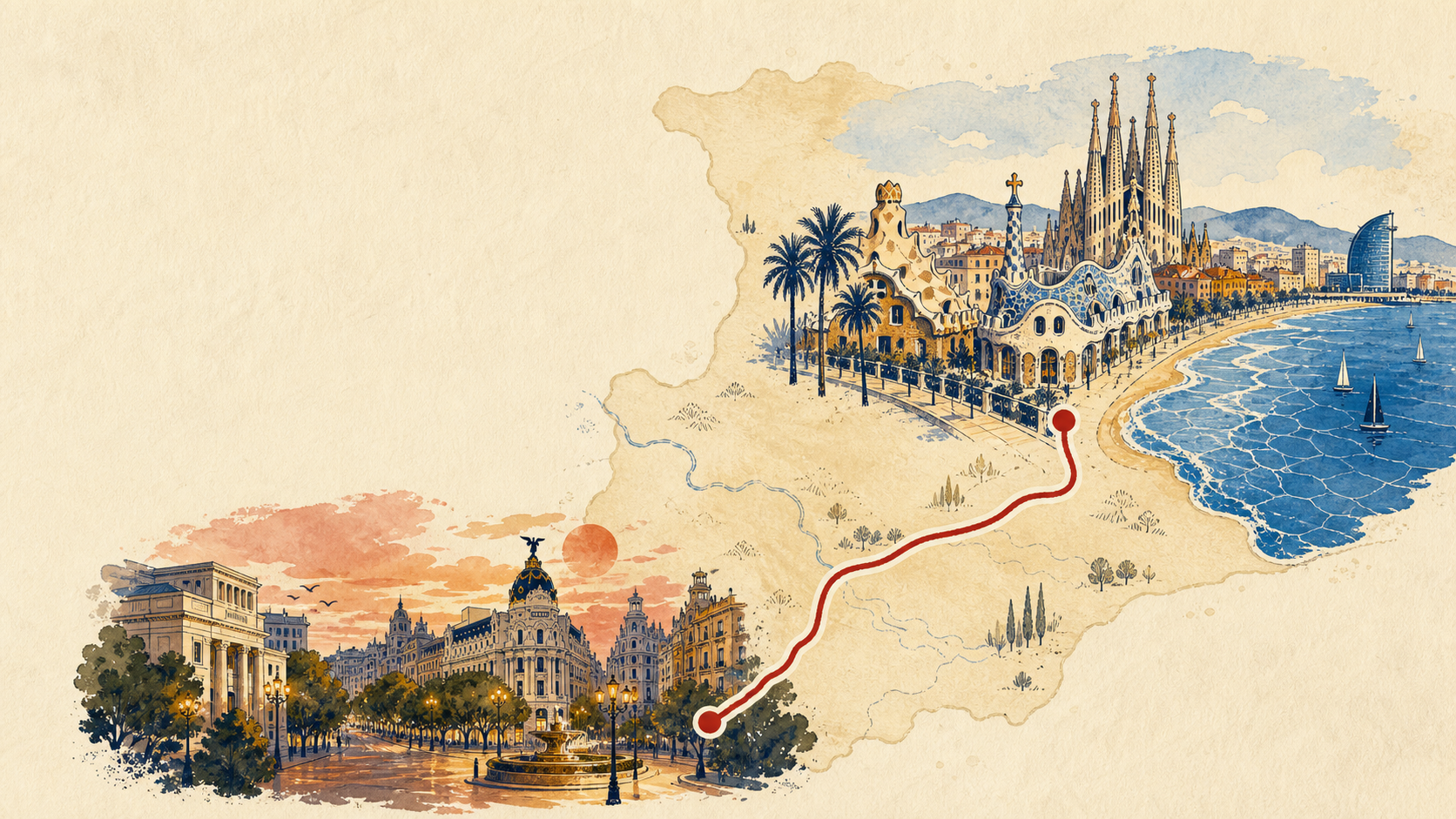
The short answer is choose Barcelona when you want architecture, a Mediterranean edge, and a city that spills toward the sea. Choose Madrid when museums, neighborhoods, late dinners, and a full city rhythm matter more than a coastline. Both are good first Spain trips. They just create different days.
The quick match
| Your priority | Better first choice |
|---|---|
| A city break with water and beach-adjacent time | Barcelona |
| Big museums and a classic capital-city pace | Madrid |
| Modernist architecture and visual sightseeing | Barcelona |
| Neighborhood wandering, galleries, and long evenings | Madrid |
| A compact three-day break | Either, with one base |
| A first stop in a wider Spain route | Madrid if rail connections shape the rest of the plan |
Barcelona: choose it for the city-and-water combination
Barcelona is the right choice when the city itself is part of the outdoor experience. The sea changes the rhythm even when you do not plan a beach day. It gives a short trip an easy reset between architecture, markets, parks, and dense neighborhoods.
It is not automatically the better choice for everyone. Barcelona works best when you like walking a lot, care about visual architecture, and want a city break that feels bright and outward-facing. A good plan has one neighborhood-oriented day, one architecture-and-museum day, and one day with enough slack to follow the weather and your energy.
Madrid: choose it for depth, culture, and city life
Madrid is the stronger fit when you want a capital that can carry the whole trip without a checklist. Its appeal is less about a single postcard view and more about how much can happen in one useful day: a museum, a long lunch, a park, a neighborhood walk, and a late dinner without crossing the city repeatedly.
Spain's official tourism guidance highlights both Madrid and Barcelona as common first-trip choices, which is a good reminder that this is not a quality ranking. Madrid wins when you want culture and urban life to be the trip itself. It also makes sense when a later rail move or a nearby historic day trip is part of the real plan.
Choose by the afternoon you want
Ask what a good unplanned afternoon looks like. If it is a waterfront walk, modernist streets, a park, and a casual meal outside, choose Barcelona. If it is a museum, a shaded square, an old bar, a neighborhood detour, and a late table reservation, choose Madrid.
That answer usually tells you more than a list of attractions. It also makes the hotel decision easier. Stay near the version of the evening you actually want, rather than a famous landmark you will visit once.
Do not force both into a short break
| Time you have | Best shape |
|---|---|
| 2 to 3 full days | Pick one city and stay put |
| 4 days | Pick one city plus one relaxed day trip or a slower city day |
| 5 to 6 days | Add the second city only if the transfer supports the story you want |
| 7 days or more | Two cities can work with an arrival buffer and enough time in each |
Adding both cities because a fast train exists is still a choice to give up two easy mornings or evenings. Use how to plan an arrival day when flight times or a late check-in could make the first move fragile.
Final answer
Choose Barcelona for architecture plus the Mediterranean, and Madrid for museums, neighborhoods, and a more immersive capital rhythm. For a first Spain trip, one city done well is usually more memorable than two cities briefly sampled.
Sources & verification
Official references used to check the practical details in this guide. Schedules, prices, and access can change, so verify them again before travelling.