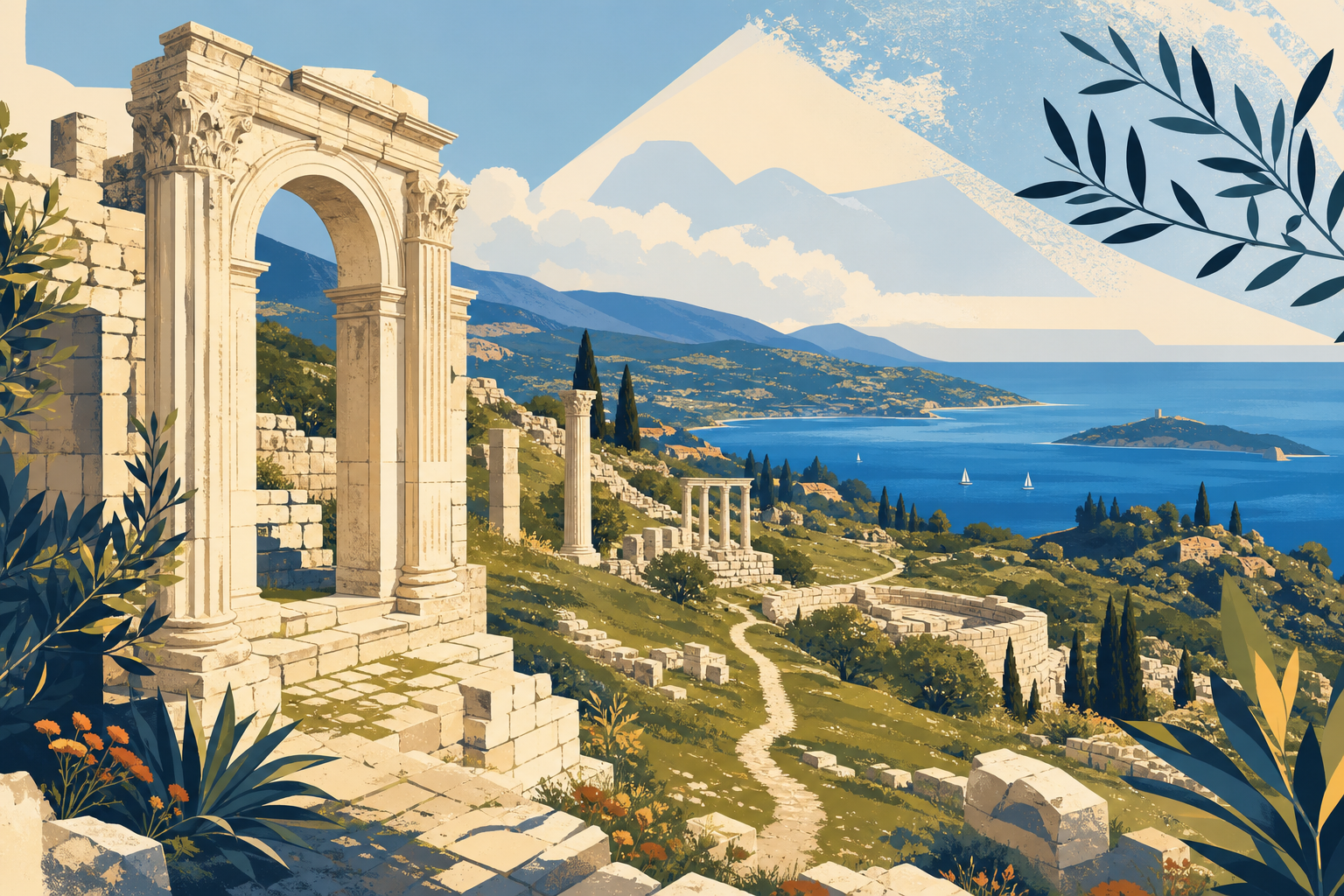
About Butrint
Butrint is one of the Mediterranean's most spectacular archaeological sites — an ancient city layered with 2,500 years of civilisation on a forested peninsula where a lake meets the Vivari Channel. Greek, Roman, Byzantine, Venetian, and Ottoman layers are stacked almost literally on top of each other: you walk from a well-preserved Greek theatre to Roman baths to a Byzantine baptistery in the space of 20 minutes. The site is set within a beautiful national park, with the forested ruins reflected in calm water. It's less visited than many comparable sites elsewhere — a rare chance to wander ancient ruins in near-solitude.
History & background
Butrint was first settled in the 8th century BC as a Greek trading post. It grew into a significant city under the Romans — Julius Caesar used it as a supply base, and his heir Octavian (later Augustus) established a colony here. It continued to flourish under the Byzantines, then passed through Venetian and Ottoman rule. Today its extraordinary archaeological completeness, combined with its natural setting within a lagoon national park, make it one of the Balkans' finest ancient sites.
Practical information
Nearby attractions
Where to stay in Albania?
Compare hotels, guesthouses, and rentals. Book with confidence.
FAQ: Butrint
Travelist editorial note: Guides are written to help travellers compare destinations, plan trips, and discover useful places. Details like prices, opening hours, visa rules, and safety information may change — always confirm important information before booking.