First trip5 days
Albania in 5 days
A compact first route through Tirana, Berat, Gjirokaster, and the southern coast without pretending every stop deserves equal time.
Read the itineraryA useful itinerary explains what to leave out. Start with the time you actually have, then choose a route whose transfers, arrival windows, and daily pace you can live with.
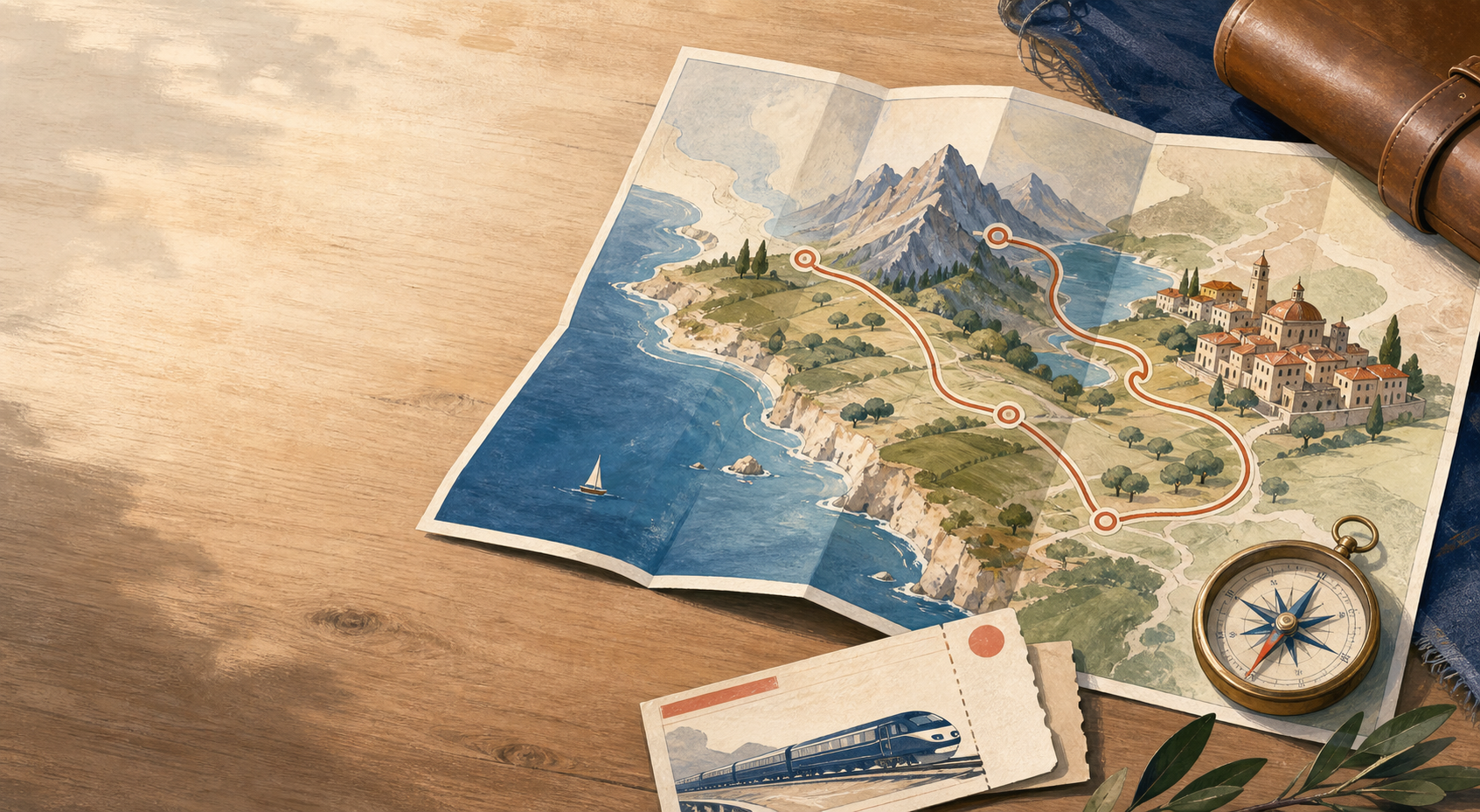
Illustrated route planning visual
Choose the difficult transfer first. Everything else should make that day easier, not more crowded.
A compact first route through Tirana, Berat, Gjirokaster, and the southern coast without pretending every stop deserves equal time.
Read the itineraryMore room for a slower Riviera section and a better arrival buffer. Compare the route with and without a car before booking.
Read the itineraryA city-first plan with thermal baths, neighborhoods, food, and realistic walking and public-transport pacing.
Read the itineraryA broader route that tests when Budapest should remain the base and when a rail or bus move earns its place.
Read the itineraryUse the rail spine for major cities, then decide deliberately where a car or tour is actually worth adding.
Read the itineraryCompare the direct rail connection with a stop in Rabat or Meknes and protect time for the journey itself.
Read the itineraryA late flight, border crossing, or ferry should not be treated like a full sightseeing day.
A two-hour train ride can become half a day after check-out, station access, waiting, and the final walk.
Leave a buffer for weather, a missed connection, or a last-mile transfer that changes by season.
Schedules, opening hours, ferry terminals, prices, and mountain conditions change. Use the itinerary as a decision framework, then confirm the current details with the relevant operator or official source.